

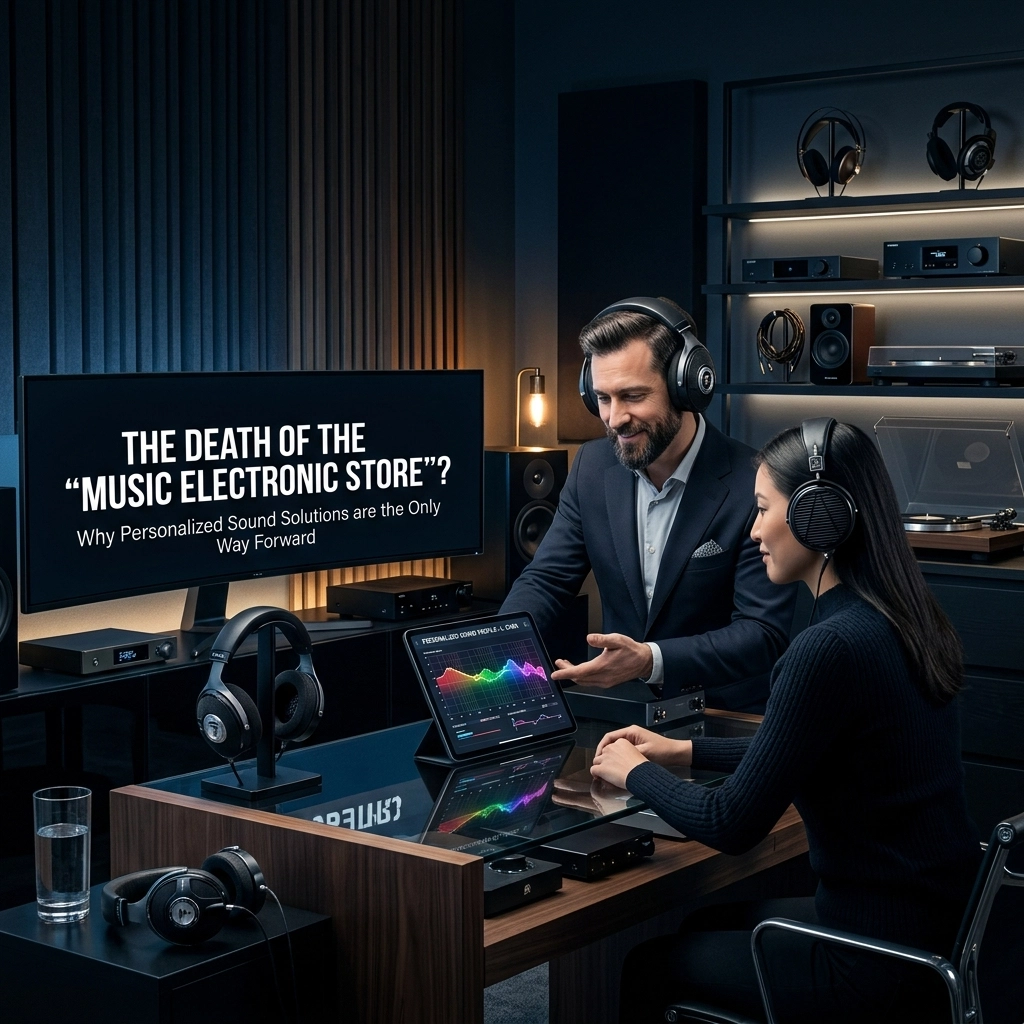
The landscape of professional audio and musical instrument retail is undergoing a fundamental transformation. For decades, the "music electronic store" served as the primary hub for both amateur enthusiasts and professional engineers. These massive showrooms offered rows of instruments, stacks of amplifiers, and walls of signal processors. However, recent economic data and industry shifts indicate that this traditional retail model is no longer sustainable.
By mid-2025, several prominent global retailers faced significant financial distress. PMT Music, formerly one of the largest music retailers in the United Kingdom, entered administration and shuttered all its physical locations. Similarly, European giant Bax Music filed for bankruptcy, and in the United States, the venerable Sam Ash filed for Chapter 11 bankruptcy in 2024. These events are not isolated incidents but represent a systemic decline in the viability of the big-box music store.
The Economic Drivers of Retail Decline
The primary catalyst for the decline of traditional retail is the widening gap between brick-and-mortar overhead and digital-first pricing structures. Physical stores require substantial investments in prime real estate, high utility costs for climate-controlled instrument storage, and large sales teams. Online competitors, operating out of centralized distribution centers, maintain significantly lower operational expenses.
This price disparity has altered consumer behavior. While customers still value the ability to interact with high-end audio equipment physically, the transaction often moves to the digital space. This phenomenon, known as "showrooming," occurs when a customer visits a physical store to test a product but ultimately completes the purchase online to secure a lower price or avoid sales tax. Under this model, the physical retailer provides the labor-intensive demonstration and expert advice but fails to capture the revenue, leading to an unsustainable business cycle.

The Shift from Commodity to Consultation
As the purchase of individual components becomes commoditized by online algorithms, the value of the transaction has shifted from the product itself to the expertise required to integrate it. A microphone or a loudspeaker is a commodity; a correctly configured wireless system for a 2,000-seat auditorium is a solution.
Traditional stores often focused on "pushing boxes": moving high volumes of inventory with minimal follow-up. Modern professional requirements have rendered this approach obsolete. The complexity of modern audio ecosystems, including networked audio and advanced digital processing, requires a level of support that traditional retail staff are often not equipped to provide. Many consumers discover that purchasing gear without a cohesive plan leads to significant errors. For further reading on avoiding these pitfalls, refer to 7 mistakes you’re making when buying music equipment and how to fix them.
The Complexity of Modern Audio Technology
The technical requirements for professional sound systems have increased exponentially. In 2026, the distinction between "analog" and "digital" is no longer just about sound quality; it is about infrastructure and interoperability. Navigating the choice between traditional signal paths and networked solutions is a primary challenge for venues today. Decisions regarding Dante vs. analog snakes or the nuances of analog vs. digital pro audio equipment require specialized engineering knowledge rather than general sales skills.
Furthermore, the regulatory environment regarding wireless spectrum has become more restrictive. The management of radio frequencies for wireless microphones and in-ear monitors is now a task for specialists. A general music store employee may not be aware of the specific frequency auctions or local interference patterns that will affect a client's performance. Professionals must now consult the ultimate guide to wireless mic frequencies in 2026 to ensure legal and functional operation.

Why Personalized Sound Solutions are the Only Way Forward
A "Personalized Sound Solution" differs from a standard retail purchase in three distinct ways: analysis, integration, and long-term support. Rather than selecting a product based on a catalog description, the process begins with a comprehensive analysis of the physical space, the acoustic properties of the room, and the specific needs of the end-user.
1. Site-Specific Analysis
Every venue has unique acoustic challenges. A speaker system that performs exceptionally in a recording studio may be inadequate for a house of worship with high ceilings and reflective surfaces. Personalized solutions prioritize the environment over the inventory. For organizations like churches, selecting specific equipment such as in-ear monitors requires an understanding of the band's workflow and stage volume. Specialized guides like 10 things to know when looking for IEMs for your church worship band illustrate the depth of knowledge required for these specific installations.
2. Systems Integration
Individual components must function as a unified system. This includes ensuring power requirements are met, signal-to-noise ratios are optimized, and control interfaces are user-friendly for the intended operators. Professional-grade hardware, such as the high-performance subwoofers and loudspeakers used in modern touring rigs, requires precise crossover settings and time alignment to deliver clear sound.

3. Objective Performance Metrics
Personalized solutions rely on data rather than subjective opinions. Using acoustic modeling software and real-time analyzers allows professionals to verify that a sound system meets the required Sound Pressure Levels (SPL) and clarity indices before the first event occurs. This eliminates the "trial and error" approach common in DIY retail purchases.
The Role of the Professional Audio Partner
The transition away from traditional music stores does not mean that the need for expert guidance has vanished; rather, it has localized. JAMMIN' Sound Solutions operates within this new paradigm by functioning as a technical partner rather than a simple vendor. The focus is on providing pro audio equipment that is specifically curated for the client’s unique application.
The value proposition has shifted to the "Total Cost of Ownership" (TCO). While a personalized solution may have a higher initial consulting fee than an off-the-shelf purchase from a discount website, it significantly reduces the costs associated with equipment failure, improper installation, and the eventual need to replace unsuitable gear. Industry professionals often question if expensive audio gear is worth it, and the answer invariably depends on the specific context of the installation.

Conclusion: Adapting to the New Reality
The "Death of the Music Electronic Store" is not the end of the audio industry; it is an evolution. The industry is moving away from the mass-market retail model toward a service-oriented, consultative approach. This shift benefits the consumer by ensuring that investments in technology result in functional, high-performance systems rather than a collection of mismatched components.
For organizations and professionals looking to navigate this transition, the path forward involves seeking expertise that extends beyond the sales floor. Whether you are building a professional sound system from the ground up or upgrading an existing facility, a methodical, personalized approach is the only way to ensure success in the modern audio landscape.
For those ready to move beyond the constraints of traditional retail and explore professional integration, further resources are available on our blog or by reviewing our comprehensive guide to pro audio equipment. To discuss a specific technical challenge, you may contact us directly for a consultation.