

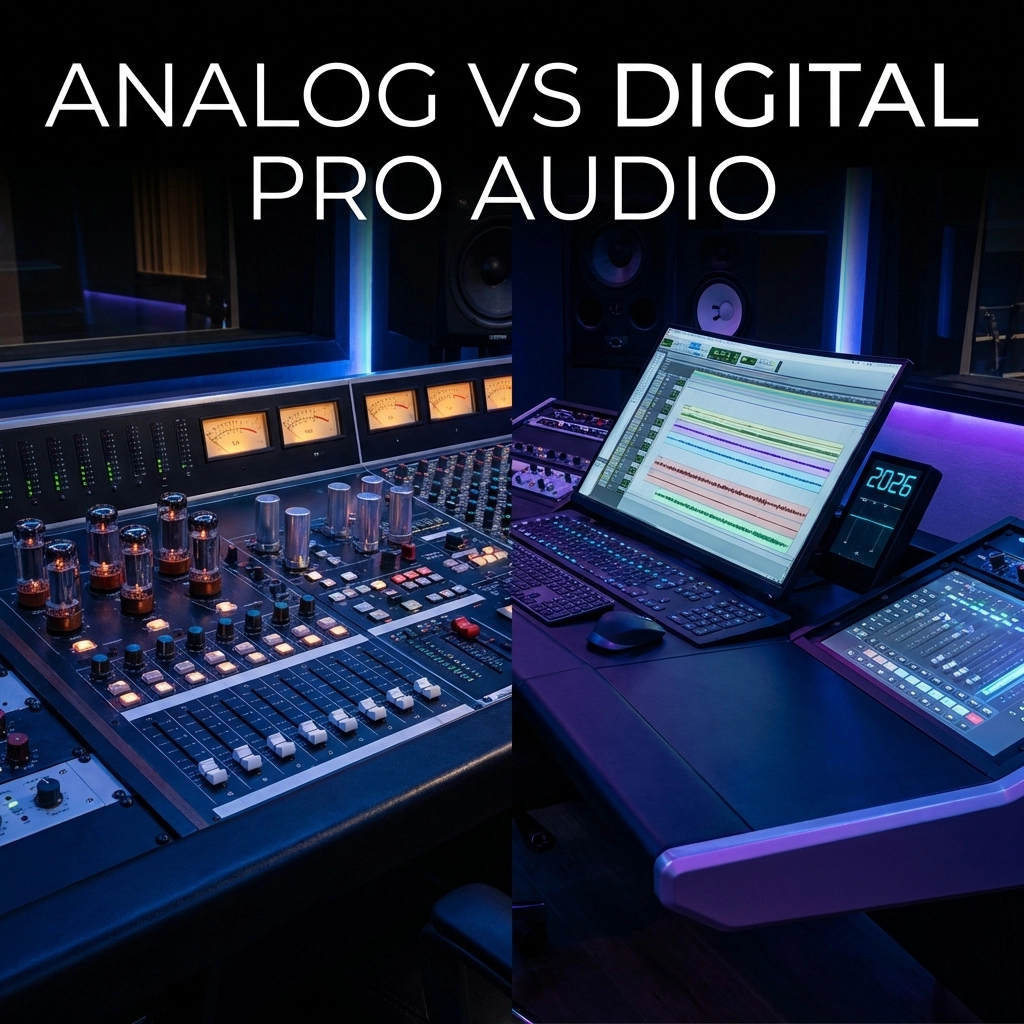
The analog versus digital debate has persisted in the pro audio equipment industry for decades. As technology continues to advance in 2026, the question remains relevant for musicians, venue operators, churches, and audio professionals looking to buy music equipment that serves their specific needs.
This guide examines the technical differences, practical applications, and real-world considerations for both analog and digital audio gear. The goal is to provide clear information that helps inform purchasing decisions at any music electronic store or audio sound store.
Understanding the Fundamentals
Before comparing the two formats, it is important to understand what distinguishes analog from digital audio processing.
Analog audio operates through continuous electrical signals that directly represent sound waves. The signal flows through physical circuits, transformers, and components that shape the audio in real time. Traditional mixing consoles, tube amplifiers, and tape machines fall into this category.
Digital audio converts sound waves into binary data: sequences of ones and zeros. This data can be processed, stored, and transmitted without the degradation associated with analog signal paths. Digital audio workstations (DAWs), digital mixers, and software plugins operate in this domain.

Key Technical Differences
Several measurable factors distinguish analog and digital pro audio equipment. Understanding these specifications helps when evaluating instrument equipment for purchase.
Noise Performance
Digital audio provides superior noise performance in most applications. At 24-bit depth, digital systems achieve a theoretical noise floor of -144 dB FS. This level of quiet operation surpasses what analog equipment can deliver.
Analog systems carry inherent noise characteristics. Tape hiss, circuit noise, and electromagnetic interference affect the signal path. While some audio professionals value these characteristics for aesthetic purposes, they represent technical limitations.
Signal Integrity
Digital signals maintain consistent quality regardless of cable length or the number of processing stages. The binary nature of digital data means it either arrives intact or it does not: there is no gradual degradation.
Analog signals lose quality over distance and through each processing stage. Long cable runs, multiple connections, and repeated copying all contribute to signal degradation. This factor matters significantly for live sound systems for musicians and permanent venue installations.
Dynamic Range
Modern digital systems offer extensive dynamic range, expanding with higher bit depths. This provides greater headroom and reduces the risk of clipping during recording and live applications.
Analog equipment handles transient peaks differently. Rather than hard clipping, analog circuits often compress or saturate signals in ways that many engineers find musically pleasing. This characteristic contributes to the "warmth" often attributed to analog gear.

Advantages of Digital Pro Audio Equipment
Digital audio gear offers several practical benefits for professional sound solutions in 2026.
Workflow Efficiency
Digital systems enable rapid editing, recall of settings, and complex routing configurations. A digital mixing console can store hundreds of presets, allowing instant setup changes between bands at a venue or different worship services at a church.
Cost Effectiveness
Comparable functionality in digital format typically costs less than analog equivalents. A digital mixer with 32 channels, built-in effects, and recording capabilities may cost significantly less than an analog console with similar channel count and separate outboard processing.
Archival Reliability
Digital recordings do not degrade over time when properly stored. Audio files from 2006 sound identical to when they were created. Analog tape, by contrast, deteriorates with age and repeated playback.
Software Updates
Digital equipment often receives firmware updates that add features and improve performance. This extends the useful life of the equipment for music production and live applications.
Compact Form Factor
Digital processing allows for smaller, lighter equipment. This matters for touring musicians, portable PA systems, and venues with limited space for audio sound store equipment.
Advantages of Analog Pro Audio Equipment
Analog audio gear maintains relevance for specific applications and preferences.
Sonic Character
Analog circuits impart harmonic content that many audio professionals find desirable. Tube preamps, transformer-coupled mixers, and tape machines add coloration that digital systems do not naturally produce.
Tactile Experience
Physical knobs, faders, and switches provide immediate feedback. Some engineers and musicians prefer the hands-on interaction that analog equipment offers over touchscreens and mouse-driven interfaces.
Durability and Repair
Well-built analog equipment can operate for decades. When failures occur, repairs often involve replacing discrete components rather than entire circuit boards. A skilled technician can service vintage analog gear using readily available parts.
No Conversion Artifacts
Analog signal paths avoid the potential issues associated with analog-to-digital and digital-to-analog conversion. Poor quality converters can introduce jitter, aliasing, and other artifacts that affect audio quality.

Application-Specific Recommendations
Different use cases favor different approaches to pro audio equipment selection.
Recording Studios
Professional recording environments benefit from hybrid setups. A digital audio workstation handles recording, editing, and mixing duties efficiently. Select analog outboard processors: compressors, equalizers, preamps: provide sonic options for specific tracks or the mix bus.
Live Venues
Digital mixing consoles dominate professional live sound applications. The ability to save and recall shows, integrate with personal monitor systems, and provide remote control via tablet makes digital systems practical for sound systems for musicians in concert settings.
Houses of Worship
Churches typically benefit from digital infrastructure. Multiple services, volunteer operators, and varying program requirements make preset recall and simplified operation valuable. Digital systems also facilitate audio streaming and recording for online ministries.
Home Studios
Budget constraints often determine the best approach for home-based musicians. Quality digital interfaces and software provide professional capabilities at accessible price points. Selective analog additions can be made as budgets allow.
The Hybrid Approach for 2026
The most effective strategy for many applications combines digital and analog technologies. This approach leverages the strengths of each format while minimizing limitations.
A practical hybrid setup might include:
- Digital audio workstation for recording, editing, and mixing
- Quality analog-to-digital and digital-to-analog converters
- Select analog preamps for tracking
- Analog bus compressor or equalizer for mix processing
- Digital effects and plugin processing for flexibility
The quality of conversion components matters significantly in hybrid systems. Investment in capable DACs and ADCs ensures that transitions between analog and digital domains preserve audio quality.

Making an Informed Decision
When preparing to buy music equipment, consider these factors:
Budget: Digital systems typically offer more functionality per dollar. Analog equipment often commands premium pricing, particularly for well-regarded vintage or boutique units.
Application: Live sound applications generally favor digital systems. Studio work may benefit from analog additions. Evaluate the specific requirements of the intended use.
Operator Experience: Digital systems require learning software interfaces and menu structures. Analog equipment presents a more immediate, visual layout. Consider who will operate the equipment regularly.
Future Requirements: Digital systems may receive updates and expanded capabilities. Analog equipment provides stable, known performance over time. Both approaches have merit depending on organizational priorities.
Conclusion
The analog versus digital question does not have a universal answer. Both technologies serve legitimate purposes in professional audio applications. Digital excels in reliability, convenience, and technical performance metrics. Analog offers sonic character and tactile engagement that some applications require.
For musicians, venues, churches, and audio professionals evaluating instrument equipment in 2026, the decision should align with specific priorities, budgets, and operational requirements. Many find that a thoughtful combination of both technologies delivers optimal results.
JAMMIN' Sound Solutions provides consultation and equipment for both analog and digital pro audio applications. Visit jamminproaudio.com for additional information on professional sound solutions and available audio gear.