

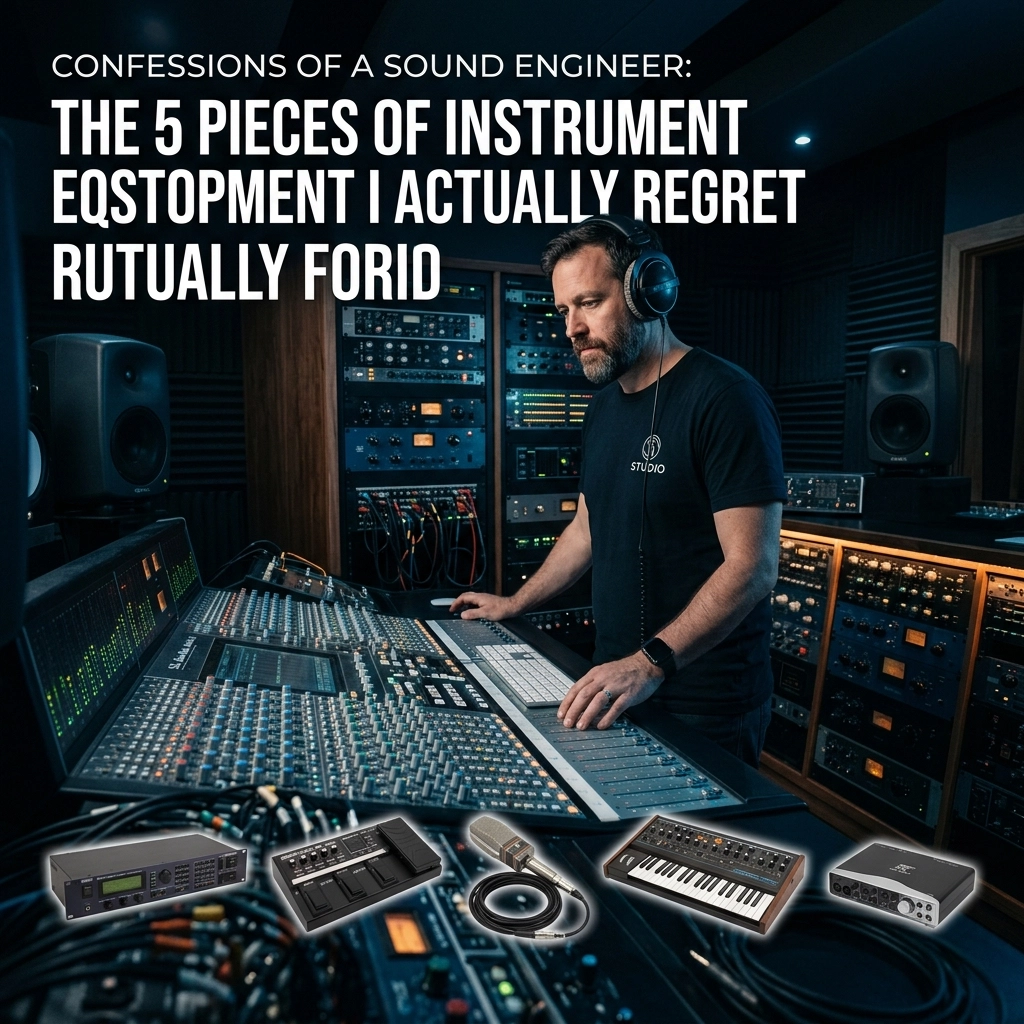
The process of building a professional audio environment often involves a cycle of acquisition, testing, and eventual replacement. For many sound engineers, the pursuit of the "perfect" signal chain results in the accumulation of equipment that fails to deliver long-term value. Identifying which tools provide a return on investment and which merely occupy space is essential for maintaining an efficient workflow and a balanced budget.
Professional audio environments require reliability and functional versatility. When equipment fails to meet these standards, it becomes a liability. This analysis examines five specific types of instrument equipment that frequently result in professional regret, based on technical limitations and practical utility in the field.
1. Proprietary Polyphonic Synthesizer Pedals
Many engineers and guitarists are drawn to the promise of transforming a standard stringed instrument into a complex synthesizer without the need for specialized pickups. Equipment such as the Boss SY-300 is often marketed as a solution for achieving "limitless" soundscapes. However, technical experience often reveals a different reality.
Proprietary synth engines frequently possess a highly specific sonic character that is difficult to bypass. In the case of units like the SY-300, the "characteristic sound" of the manufacturer’s digital processing becomes pervasive across all presets. While the initial experience of exploring factory sounds is engaging, the utility in a professional mix often diminishes quickly. The lack of deep integration with external oscillators or the inability to move beyond the internal waveforms results in a unit that is used for a single project and subsequently shelved.
For those considering high-cost niche processors, it is often more efficient to invest in foundational pro-audio equipment that offers broader utility across multiple recording and live sound applications.

2. Over-Engineered Multi-Effects Units
The market for high-end multi-effects processors is saturated with units promising "studio-quality" effects in a single chassis. While the convenience of a compact setup is clear, the practical application often presents significant challenges. Many boutique high-end units feature complex editing software that is prone to stability issues or requires a steep learning curve that disrupts the creative process.
In several documented cases, engineers have found that expensive, specialized multi-effects units do not provide a meaningful advantage over industry-standard mid-range options, such as the Line 6 Helix LT. The price discrepancy between a flagship unit and a functional mid-range alternative often pays for the brand name and experimental features rather than actual sound quality improvements. Furthermore, the lack of intuitive hardware controls can make real-time adjustments difficult during high-pressure sessions.
Professionals are encouraged to evaluate whether a unit's high cost correlates with improved output or if it simply adds unnecessary complexity to the signal chain. Understanding are expensive audio gear worth it is a critical step before making a major investment.

3. Redundant Digital Pitch Shifters
Incremental upgrades in digital processing often lead professionals to replace functional equipment with the "latest" version. A common example is found in polyphonic pitch shifters. While manufacturers claim improved tracking and latency in newer models, the actual difference in a dense mix is often negligible.
Many sound engineers regret discarding older, simpler units: like the original Pitchfork: in favor of larger, more feature-heavy successors. The original units often occupy less space on a pedalboard and provide a specific "lo-fi" or "glitch" character that newer, more "perfect" algorithms lack. When the goal is musical texture rather than mathematical precision, the newer equipment often feels sterile.
Before upgrading, it is necessary to assess if the current equipment fulfills the functional requirement. Redundancy is one of the 7 mistakes you’re making when buying music equipment.
4. Budget Bulk Connectivity Solutions
In an effort to manage costs, it is common to purchase bulk quantities of budget-grade cables, connectors, and power supplies. This is frequently cited as a major regret among experienced engineers. Budget cables often lack proper shielding, leading to increased floor noise and susceptibility to radio frequency interference (RFI).
In a professional studio or live environment, a single failed connector can halt production. The cost of troubleshooting and replacing cheap cables often exceeds the initial investment required for high-quality, shielded alternatives. Reliability is a non-negotiable factor in sound reinforcement. Investing in 5 must-have accessories for every professional sound system ensures that the foundation of the audio path remains secure.

5. Unverified Digital "Vintage" Clones
The appeal of vintage analog sound at a digital price point has led to an influx of hardware "clones" of classic compressors, EQs, and preamps. While some manufacturers succeed in replicating the harmonic distortion and behavior of original units, many others fall short.
Regret typically stems from units that utilize low-quality digital converters or poorly implemented modeling algorithms. These "clones" often lack the headroom and tactile response of the original hardware. In a professional setting, an engineer is often better served by a high-quality, transparent digital plugin or a single piece of genuine analog pro audio equipment rather than a rack filled with mediocre hardware emulations.

Strategic Asset Acquisition
Avoiding equipment regret requires a shift from impulsive acquisition to strategic asset management. The following criteria should be applied to any potential purchase:
- Utility: Does the equipment solve a recurring problem or add a unique capability that cannot be achieved with current tools?
- Reliability: Is the build quality suitable for professional use, and does the manufacturer provide adequate support?
- Longevity: Will the software or digital components remain relevant for more than 24 months?
- Workflow Integration: Does the equipment streamline the process or introduce unnecessary technical hurdles?
For professionals seeking to build a sustainable and effective setup, focusing on core components is essential. Whether you are learning how to build a professional sound system in 5 steps or refining a minimal home studio setup, the emphasis should always be on quality over quantity.
JAMMIN' Sound Solutions provides the expertise and high-performance equipment necessary to ensure that your investments contribute to superior sound quality. By prioritizing functional excellence, engineers can avoid the common pitfalls of equipment regret and focus on the technical execution of their work. For further information on optimizing your audio environment, visit our about us page or contact us for professional consultation.