

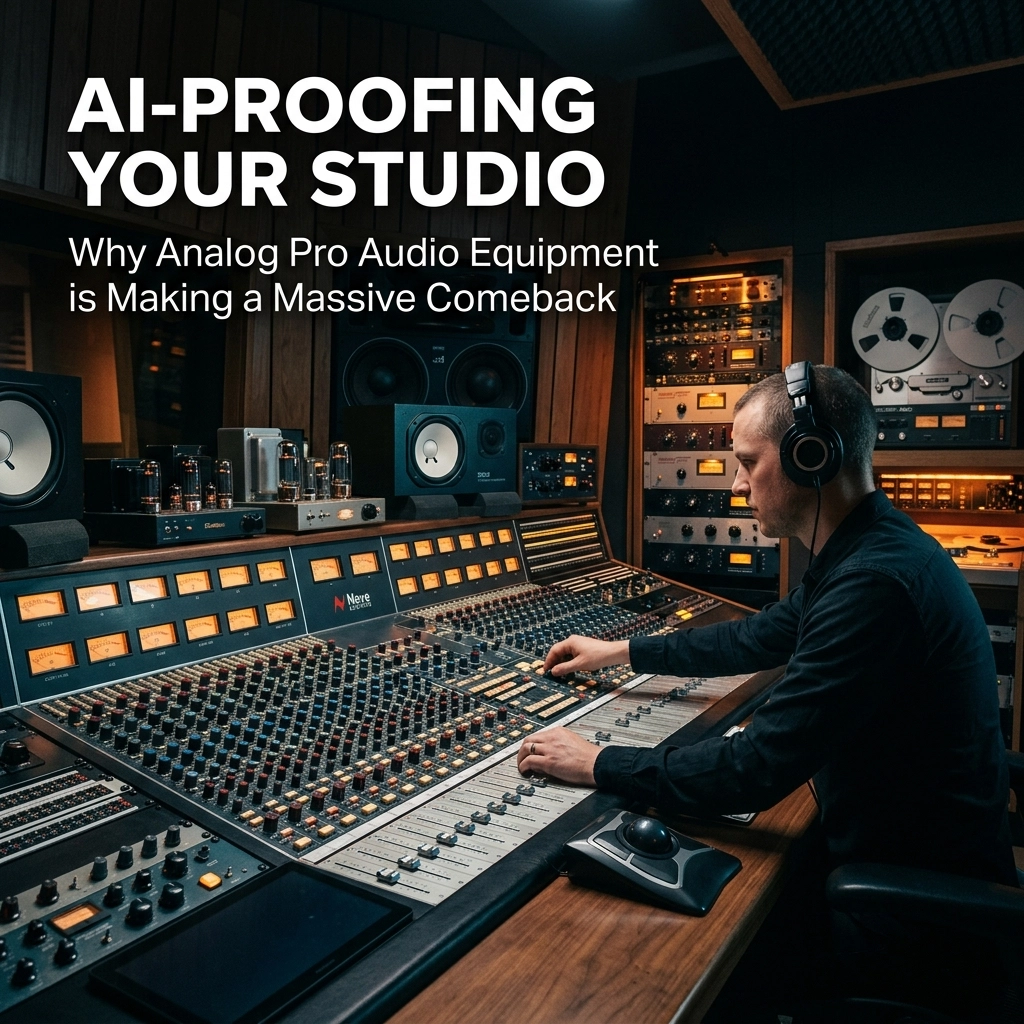
The audio production landscape in 2026 is defined by the rapid integration of Artificial Intelligence. AI tools now handle mixing, mastering, and even synthesis with high degrees of technical accuracy. However, this shift toward algorithmic perfection has created a market saturated with "sterile" audio. Consequently, professional engineers and studio owners are reinvesting in analog pro audio equipment. This resurgence is not merely a trend based on nostalgia. It is a strategic move to "AI-proof" audio production by introducing organic variables that digital systems cannot easily replicate.
The Science of Analog Warmth and Harmonic Distortion
Digital audio is fundamentally binary. It operates through discrete samples that represent sound waves as numerical data. While digital high-fidelity is technically "perfect," it often lacks the complex textures associated with high-end recordings. Analog equipment operates through continuous voltage. As electrical signals pass through physical components like vacuum tubes, transformers, and transistors, they undergo subtle changes.
These changes are known as harmonic distortion. Unlike digital clipping, which is harsh and undesirable, analog saturation adds "warmth." This warmth consists of even-order harmonics that the human ear finds pleasing. AI algorithms can simulate these effects, but they often fail to capture the dynamic, non-linear ways that physical hardware reacts to different input levels. For a deeper technical comparison, we offer an analysis of analog vs. digital pro audio equipment to assist in your procurement decisions.

Tactile Engagement and Creative Efficiency
The move toward analog is also a response to "screen fatigue." Digital Audio Workstations (DAWs) require constant interaction with a mouse and keyboard. This interface can limit creative flow. Analog hardware provides tactile control through knobs, faders, and switches. This physical interaction allows for instantaneous adjustments and a more intuitive mixing process.
Research indicates that tactile feedback improves the speed of decision-making in the studio. When an engineer moves a physical fader, the brain processes the change differently than when dragging a digital slider. This physical connection to the sound is a primary driver for younger generations, such as Gen Z and Millennials, who value authenticity over algorithmic convenience. Physical gear demands attention and creates a focused environment that digital tools often disrupt with notifications and visual clutter.
The AI-Proof Factor: Unrepeatable Sonic Fingerprints
AI models are trained on existing data. They excel at identifying patterns and replicating established sounds. However, analog hardware possesses inherent unpredictability. Components age, heat affects circuitry, and no two pieces of vintage equipment sound exactly the same. These "imperfections" create a sonic fingerprint that is unique to a specific studio or session.
By using analog front-ends: such as preamps and compressors: engineers insert a physical barrier between the performance and the digital recording. This ensures that the base audio file contains complex information that an AI cannot easily reverse-engineer or mimic. In a market where anyone can generate a clean digital track, the possession of a unique, "un-AI-able" sound is a significant competitive advantage. We provide a range of specialized pro audio solutions designed to integrate these physical variables into modern workflows.

Longevity and Asset Value
From a business perspective, analog hardware represents a more stable investment than digital software. Software plugins are subject to subscription models, compatibility issues with new operating systems, and rapid obsolescence. A high-quality analog compressor or equalizer typically retains its value for decades. In many cases, vintage hardware appreciates in value as the components become rarer.
Investing in physical equipment is a hedge against the ephemeral nature of digital assets. While a plugin may become unusable after five years due to a lack of updates, a well-maintained analog console can remain operational for half a century. Understanding if expensive audio gear is worth the investment requires looking at the long-term lifecycle of the hardware versus the recurring costs of software.
Integrating Analog into a Modern Hybrid Workflow
Choosing analog does not require abandoning the efficiency of digital systems. Most professional studios now utilize a "hybrid" workflow. This approach combines the precision of a DAW with the character of analog outboard gear.
The standard hybrid setup involves:
- Analog Tracking: Using physical microphones and preamps to capture the source. Understanding polar patterns is essential here to ensure the hardware is utilized correctly.
- Analog Summing: Routing digital tracks through an analog mixer to add depth and width to the final mix.
- Analog Mastering: Using hardware limiters and EQs to provide a final layer of cohesive texture.
This methodology provides the best of both worlds. It maintains the editing capabilities of digital while "AI-proofing" the final output with the depth of analog circuitry.

Tactile Hardware and Professional Credibility
In the service industry of music production, the physical appearance of a studio influences client perception. A room filled with physical gear communicates a level of professional commitment and expertise that a laptop-only setup may struggle to project. It signals that the studio provides specialized sound solutions that cannot be replicated at home with consumer-grade AI tools.
For many clients, the experience of recording in a space with tangible, high-end equipment is part of the value proposition. It validates the cost of professional services. JAMMIN' Sound Solutions understands that professional environments require reliable, high-performance equipment to maintain this standard of excellence. Our about us page outlines our commitment to providing these high-level solutions for musicians and engineers.
Technical Considerations for Analog Integration
Transitioning back to analog requires careful technical planning. Issues such as signal chain management, impedance matching, and cable quality become more critical. Unlike digital signals, analog signals are susceptible to interference and degradation over long distances.
Key considerations include:
- Cabling and Connectivity: Using high-quality balanced cables to minimize noise.
- Power Conditioning: Ensuring stable voltage to protect sensitive vintage components.
- Interfacing: Utilizing high-quality AD/DA converters to ensure the analog character is preserved when the signal enters the digital domain.
For those expanding their setups into live environments or complex studio configurations, choosing the right accessories is vital for maintaining signal integrity.

Conclusion: The Strategic Choice for 2026
The resurgence of analog equipment is a calculated response to the digitization of the music industry. As AI continues to democratize basic audio production, professional success will depend on the ability to offer something the algorithm cannot. Analog hardware provides the texture, unpredictability, and tactile experience that define high-quality audio.
By incorporating analog pro audio equipment into a studio workflow, engineers secure a unique sonic identity. This hardware represents an investment in both sound quality and business longevity. JAMMIN' Sound Solutions remains dedicated to providing the tools necessary for professionals to navigate this evolving landscape. To discuss how to integrate analog solutions into your current setup, we encourage you to contact us for a professional consultation.