

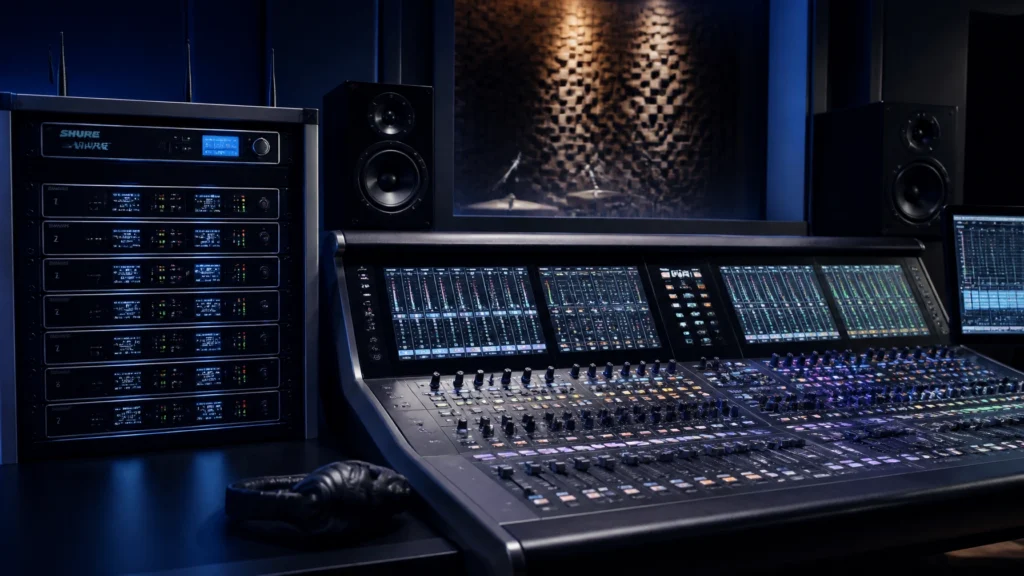
Achieving high-quality audio reproduction requires a systematic approach to equipment selection, signal routing, and environment optimization. For musicians, engineers, and venue managers, the transition from consumer-grade setups to professional sound solutions involves understanding the technical nuances of modern hardware. This guide provides a comprehensive overview of the essential components and technologies currently defining the pro audio industry.
Fundamental Components of Professional Sound Systems
A professional audio system is comprised of several critical stages: source capture, signal processing, amplification, and sound reinforcement. The quality of the final output is limited by the weakest link in this chain.
High-Performance Loudspeakers and Subwoofers
The final stage of the audio chain: the speakers: must accurately translate electrical signals into acoustic energy. Professional-grade equipment, such as that offered by RCF and Turbosound, is engineered for high output and durability. Unlike consumer speakers, professional units feature advanced internal bracing and precision porting to maintain clarity at high sound pressure levels (SPL).

Subwoofers are necessary for reproducing low frequencies that standard full-range speakers cannot handle efficiently. Proper integration of subwoofers requires a crossover system to ensure that frequencies are distributed correctly between the main speakers and the sub-bass units, preventing phase issues and frequency masking.
Wireless Technology and Spectrum Management
Wireless systems have become standard in live performance environments. However, as the RF (Radio Frequency) spectrum becomes increasingly crowded, managing these systems requires more sophisticated technology.
Wideband Multichannel Audio Systems (WMAS)
WMAS is a significant advancement in wireless audio. Traditional wireless systems use narrowband FM or digital modulation, where each channel occupies a specific, fixed frequency. WMAS utilizes a wideband approach, allowing multiple audio channels to operate within a single wide RF carrier. This technology provides:
- Greater spectral efficiency.
- Improved resistance to interference.
- Simplified frequency coordination for high-channel-count environments.
In-Ear Monitor (IEM) Implementation
IEM systems are critical for maintaining low stage volume and providing performers with clear, personalized mixes. Common mistakes in IEM setups often involve poor RF planning or improper earphone fit. Utilizing foam tips and performing a site-specific RF scan are standard procedures for ensuring reliable operation.

Digital Advancements: 32-Bit Float Audio
The shift from 16-bit and 24-bit audio to 32-bit float technology has changed how dynamic range is managed. In a 24-bit system, the maximum signal level is fixed; exceeding this level results in digital clipping and irreversible distortion.
32-bit float audio offers a massive theoretical dynamic range. This allows for the recovery of signals that would otherwise be clipped or lost in the noise floor. While 24-bit remains sufficient for controlled environments, 32-bit float is an essential tool for unpredictable recording scenarios, such as live performances or field recording where gain levels cannot be perfectly preset.
Guitar Amplification: FRFR vs. Traditional Cabinets
For guitarists utilizing digital modelers (such as the Helix or Quad Cortex), the choice of output device is a primary consideration.
Traditional Cabinets
A traditional guitar cabinet acts as a physical filter. It has a limited frequency response (typically rolling off sharply above 5 kHz) which contributes to the "amp-in-the-room" feel. However, this colors the signal and adds stage volume that can interfere with the front-of-house (FOH) mix.
FRFR (Full-Range Flat Response)
FRFR systems are designed to reproduce the entire audible spectrum without adding coloration. When used with a modeler, the speaker reproduces the sound of a mic’d cabinet. This ensures consistency between the stage, the FOH, and the livestream.

Optimizing Livestream Audio Quality
Livestreaming has become a core requirement for many professional sound solutions, particularly in houses of worship and corporate settings. A common error is sending the FOH mix directly to the stream. Because FOH mixes are tuned for room acoustics, they often lack the clarity and balance required for online listeners.
Key strategies for a successful livestream mix include:
- Dedicated Mix Bus: Create a separate mix on the digital console specifically for the stream.
- Ambient Microphones: Deploy microphones to capture room ambience and audience reactions, which prevents the stream from sounding "sterile."
- Dedicated Compression: Apply bus compression to the stream output to manage dynamics for varied listening environments (e.g., laptop speakers, mobile devices).
Criteria for Selecting Professional Audio Gear
When evaluating pro audio equipment, several objective factors should be considered:
- Build Quality: Professional gear should feature robust enclosures, high-quality connectors (XLR, Neutrik), and industrial-grade components.
- Specifications: Look for detailed frequency response charts, signal-to-noise ratios, and Total Harmonic Distortion (THD) ratings.
- Serviceability: Select brands that offer reliable support and available replacement parts.

Avoiding common mistakes when buying music equipment is essential for long-term ROI. Prioritize equipment that offers scalability and adheres to industry standards such as Dante for networking or standard rack sizing for installation.
Conclusion
Building a professional sound system is a technical process that requires attention to detail across multiple disciplines. By selecting high-performance hardware, implementing advanced digital and wireless technologies, and tailoring mixes for specific outputs, users can achieve superior audio results. For those seeking personalized assistance in selecting the right professional sound solutions, consulting with industry specialists is recommended to ensure the system meets specific technical requirements.