

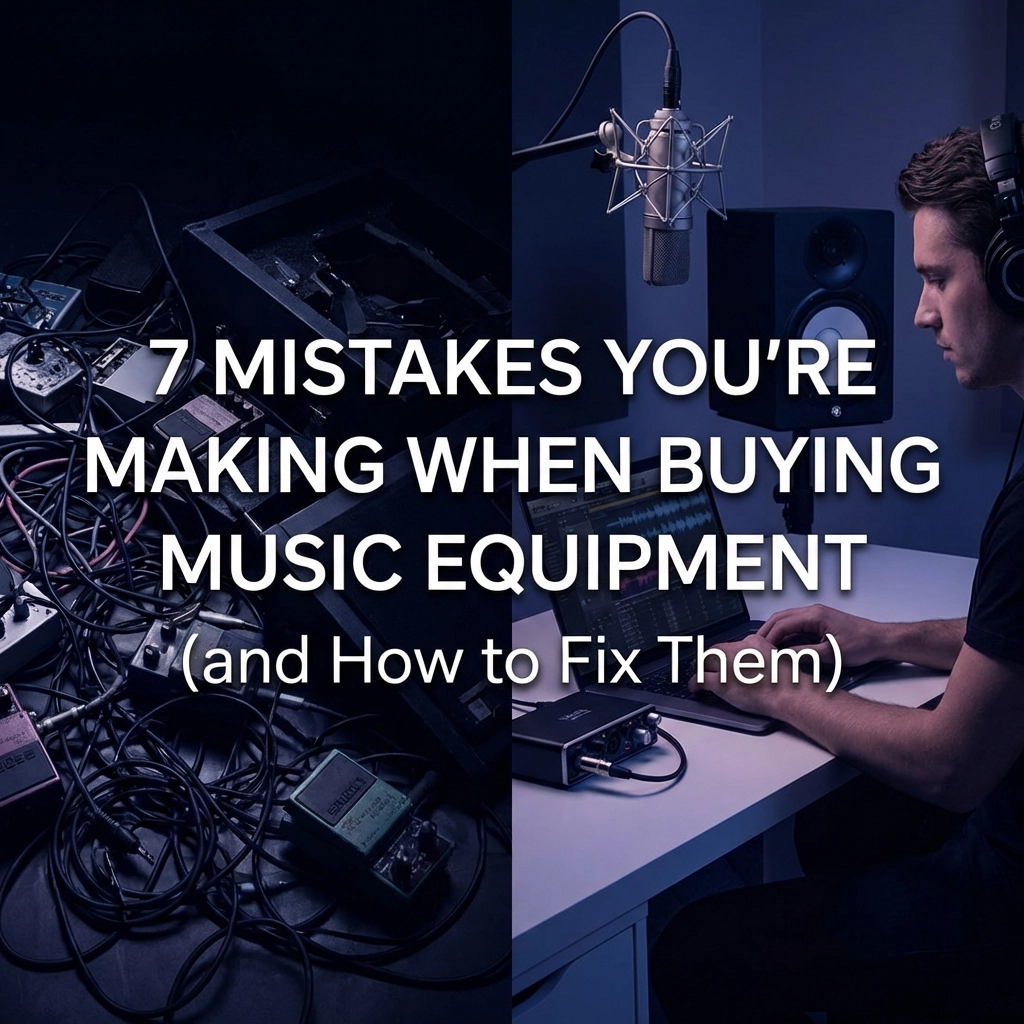
Purchasing pro audio equipment requires careful consideration. Musicians, venue operators, churches, and audio professionals frequently make avoidable errors that lead to wasted budgets, subpar performance, and long-term frustration. Understanding these common mistakes before visiting an audio sound store or browsing instruments websites can save significant time and money.
This guide outlines seven critical mistakes made when purchasing equipment for music and provides actionable solutions for each.
Mistake #1: Choosing Equipment Based Solely on Price
The most common error when shopping for audio gear is making decisions based exclusively on cost. Budget constraints are real, but selecting the cheapest option available typically results in equipment that underperforms, fails prematurely, or requires expensive repairs.
Low-cost sound systems for musicians often feature inferior components, poor build quality, and limited warranties. These issues compound over time, leading to replacement costs that exceed the initial savings.
How to Fix It
Establish a realistic budget that accounts for quality and longevity. Visit a music electronic store to test higher-end equipment and understand what proper quality feels like. Compare specifications and reviews across price points. The goal is finding the optimal balance between cost and performance rather than simply minimizing expenditure.
For churches and venues, consider the total cost of ownership. Equipment that lasts ten years at a higher initial price often costs less than replacing budget equipment every two to three years.

Mistake #2: Ignoring Compatibility and System Integration
Audio equipment operates as part of a larger system. Purchasing individual components without considering how they integrate with existing gear creates problems ranging from minor inconveniences to complete incompatibility.
Common compatibility issues include mismatched impedance ratings, incompatible connection types, and power requirements that exceed available infrastructure. These oversights force additional purchases or render new equipment unusable.
How to Fix It
Document existing equipment specifications before shopping. Note connection types, power requirements, impedance ratings, and signal flow. When evaluating new pro audio equipment, verify compatibility with current systems.
Professional sound solutions providers can assist with system planning and integration assessments. Consulting with experts before purchasing prevents costly mistakes and ensures seamless operation.
Mistake #3: Overlooking Room Acoustics and Application Requirements
Equipment that performs exceptionally in one environment may underperform in another. A speaker system designed for outdoor festivals will behave differently in a small church sanctuary. Microphones optimized for studio recording may produce feedback issues in live settings.
Failing to match instrument equipment to specific application requirements results in suboptimal sound quality and potential technical problems.
How to Fix It
Define the primary use case before evaluating options. Consider room size, acoustic properties, typical audience size, and environmental factors. Venues should account for ceiling height, wall materials, and ambient noise levels.
For churches, evaluate whether the space requires speech clarity, musical reproduction, or both. Outdoor events demand weather-resistant equipment with sufficient power for open-air dispersion. Matching equipment to application ensures optimal performance.

Mistake #4: Neglecting Future Scalability
Current needs may not reflect future requirements. Purchasing equipment that meets only immediate demands creates limitations when expansion becomes necessary. This is particularly relevant for growing churches, developing venues, and musicians building their careers.
Systems that cannot scale require complete replacement rather than incremental upgrades, multiplying costs unnecessarily.
How to Fix It
Evaluate scalability during the purchasing process. Select equipment with expansion capabilities, modular designs, and upgrade paths. Consider whether additional inputs, outputs, or processing power might be needed within the next three to five years.
Sound systems for musicians should accommodate potential growth in performance scale. Venue operators should plan for audience capacity increases. Churches should consider future programming needs and facility expansions.
Mistake #5: Skipping Proper Research and Comparison
Rushing to buy music equipment without adequate research leads to uninformed decisions. Relying solely on brand recognition, sales recommendations, or limited online reviews often results in equipment that fails to meet actual requirements.
The market offers numerous options across every category. Insufficient comparison means potentially missing superior alternatives at comparable or lower prices.
How to Fix It
Allocate time for thorough research before committing to purchases. Compare specifications, read professional reviews, and seek input from experienced users in similar applications. Instruments websites and manufacturer documentation provide detailed technical information for objective comparison.
Visit an audio sound store to test equipment firsthand when possible. Direct experience reveals characteristics that specifications and reviews cannot fully communicate.

Mistake #6: Forgetting Essential Accessories and Support Equipment
Primary equipment receives attention while essential accessories get overlooked. Cables, stands, cases, power conditioning, and signal processing are frequently omitted from initial budgets. These items, while individually modest in cost, accumulate significantly and are necessary for proper operation.
Operating pro audio equipment without appropriate accessories compromises performance and risks damage to primary components.
How to Fix It
Create a comprehensive equipment list that includes all necessary accessories before finalizing budgets. Standard requirements include:
- Quality cables in appropriate lengths and configurations
- Mounting hardware and stands
- Protective cases for portable equipment
- Power conditioning and surge protection
- Signal processing and routing equipment
- Replacement parts and consumables
Consult with professional sound solutions providers to identify commonly overlooked items for specific applications.
Mistake #7: Underestimating the Importance of Professional Support
Purchasing equipment without considering installation, training, and ongoing support creates operational challenges. Complex audio systems require proper configuration to perform optimally. Users unfamiliar with new equipment may underutilize capabilities or create problems through improper operation.
Additionally, equipment failures without established support relationships lead to extended downtime and emergency service premiums.
How to Fix It
Factor professional support into purchasing decisions. Evaluate vendors based on post-sale services including installation, training, and technical support availability. Established relationships with knowledgeable providers prove valuable when issues arise.
For venues and churches, consider service agreements that provide regular maintenance and priority support. Musicians should establish relationships with reliable technicians who understand their specific equipment.

Making Informed Equipment Decisions
Avoiding these seven mistakes requires planning, research, and professional guidance. The investment in proper preparation pays dividends through equipment that performs reliably, integrates seamlessly, and serves requirements for years.
Whether purchasing audio gear for a touring band, upgrading a church sound system, or outfitting a new venue, the principles remain consistent. Prioritize quality over minimum cost, ensure compatibility and scalability, match equipment to applications, conduct thorough research, account for all necessary accessories, and establish professional support relationships.
For assistance with equipment selection and system planning, contact JAMMIN' Sound Solutions for expert guidance tailored to specific requirements and applications.